You’ve done the therapy. The breathwork. The journaling. The inner child work. The meditation apps and the self-help books and the workshops.
And you still hurt.
If that’s you, I want to say something important:
You are not failing at healing. The model is failing you.
As a somatic therapist working with clients in Dublin, Naas, Newbridge, and online across Ireland and worldwide, I see this constantly. People who have done enormous amounts of inner work, who understand their trauma intellectually, who have had all the insights — and whose bodies still carry the pain.
This isn’t failure. This is biology. And understanding this can change everything.
The Lie the Healing Industry Tells
We live in a culture that has turned healing into a product with a guaranteed outcome.
Do this programme. Follow these steps. Heal your trauma in 8 weeks. Transform your life.
Underneath all of it is an implicit promise: if you do the work, the pain will go away.
But what if that’s not always true?
What if some wounds don’t heal the way a cut heals? What if some losses don’t resolve? What if some pain is not a problem to be solved, but a weight you learn to carry differently?
I’m not saying this to discourage you. I’m saying it because the lie that everything can be fixed — if you just try hard enough — is causing its own kind of suffering. Because when you can’t fix it, you feel like you’ve failed. And shame gets layered on top of pain.
Why Your Nervous System Has Its Own Timeline
Here’s something crucial from the world of somatic therapy and neuroscience:
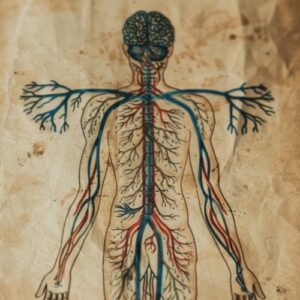
Trauma isn’t just stored in the mind. It lives in the body. Your nervous system keeps a record of everything that happened to you.
This is why you can understand something intellectually and still feel it in your bones. You can know you’re safe now — and your body can still feel like it’s in danger. You can forgive someone — and your stomach can still clench when you hear their name.
Dr. Stephen Porges, who developed Polyvagal Theory, describes something called “neuroception” — the way your body unconsciously scans for threat and safety. This happens below the level of thought. Before you can choose.
So when someone says “just let it go” — they don’t understand that the body has its own timeline. And sometimes that timeline is longer than we want it to be.
Sometimes it’s a lifetime.
The Violence of Toxic Positivity
You’ve probably heard all the phrases:
“Everything happens for a reason.”
“What doesn’t kill you makes you stronger.”
“Focus on the positive.”
“Raise your vibration.”
Sometimes these phrases are offered with genuine love. But when you’re in real pain — the kind that doesn’t lift — they can feel like violence.
Because the implication is: if you’re still suffering, you’re doing something wrong. You’re not positive enough. Not spiritual enough. Not healed enough.
This is what psychologists call spiritual bypassing — using spiritual beliefs to avoid facing genuine human pain. And it’s rampant in wellness culture.
The insistence on positivity can become a way of abandoning people who are suffering. It can make you feel more alone than you were before.
What Somatic Therapy Actually Offers
So if the pain doesn’t always go away, what’s the point of somatic therapy?
Here’s what I’ve learned from years of practice: somatic therapy isn’t about making pain disappear. It’s about changing your relationship to pain.
In Acceptance and Commitment Therapy (ACT) — one of the most evidence-based approaches to chronic pain and trauma — there’s a powerful distinction:
Clean pain is the unavoidable suffering that comes with being human.
Dirty pain is the suffering we add on top through fighting, resisting, and judging ourselves for hurting.
A lot of somatic therapy isn’t about removing the clean pain. It’s about reducing the dirty pain.
It’s about learning to be in pain without hating yourself for being in pain. To grieve without feeling broken for grieving. To struggle without adding the story that you’re failing.
This is what nervous system regulation actually looks like — not the absence of difficult feelings, but the capacity to be with them without drowning.
Grief That Doesn’t End — And Isn’t Meant To
There’s a concept in psychology called “prolonged grief” or “complicated grief” — describing people who are still deeply affected by loss years, sometimes decades, after it happened.
Society often tells these people they should have “moved on” by now.
But here’s what I’ve learned from sitting with people in deep pain:
Some grief isn’t meant to end. Some grief is the shape your love takes now that the person — or the life, or the version of yourself — is gone.
The goal isn’t to stop grieving. The goal is to find a way to carry it that doesn’t break you.
To make room for the grief and for life at the same time. Not “moving on.” Moving with.
The Pain That Isn’t Yours
In my work with family constellations, I see something profound: sometimes the pain you carry isn’t even yours.
It belongs to your mother. Your grandfather. An ancestor you never met. Grief that was never grieved. Trauma that was never witnessed. Pain that was passed down through generations.
This is intergenerational trauma — and the science on it is now substantial. Trauma can be passed down through generations, encoded in our nervous systems, shaping our lives in ways we don’t consciously understand.
This is why some pain feels so much bigger than your own story. Because it is.
And the healing here isn’t always about resolving it. Sometimes it’s about acknowledging it. Bowing to it. Saying: “I see what happened. I see what was never seen.” And letting it rest — not because it’s fixed, but because it’s finally witnessed.
Permission to Stop Trying So Hard
I want to give you permission for something.
Permission to stop trying to fix yourself. Permission to stop chasing the next programme, the next modality, the next promise of transformation.
Permission to rest — not because you’ve healed, but because you’re exhausted from trying to.
Healing fatigue is real.
The body and mind need rest from the constant work of processing, releasing, transforming. Sometimes the most healing thing you can do is… nothing.
Just be. Just exist in your imperfect, still-hurting, not-yet-transformed body. Not as a project. As a person.
A Different Kind of Hope
I want to offer you a different kind of hope.
Not the hope that says “one day you’ll be pain-free.”
But the hope that says: “You can live a meaningful life alongside your pain.”
You can have moments of joy — and still carry grief. You can build a life — and still have days where it all feels too heavy. You can love again — and still feel the ache of what was lost.
This isn’t settling. This isn’t giving up.
This is radical acceptance.
The kind that says: “This is what is. And I’m going to keep living anyway.”
Listen: When Healing Doesn’t Look Like Healing
I recently recorded a contemplative talk exploring these themes more deeply — what happens when you’ve done all the work and still hurt, why the nervous system has its own timeline, and what a different kind of hope might look like.
It’s not a meditation to fix anything. It’s permission to stop being a project.
You Are Not a Project
You are not a project to be completed. You are not a problem to be solved.
You are a human being — carrying what human beings carry.
And sometimes what we carry is heavy. Sometimes it doesn’t get lighter no matter how hard we try. Sometimes the most profound healing is simply learning to carry it with more dignity. With more compassion. With less shame.
You haven’t failed. You’re just human. And being human is hard.
Work With Me
If you’re exhausted from trying to heal and looking for a different approach — one that meets you where you are without demanding you be different — I offer somatic therapy sessions in Dublin, Naas, Newbridge, and online across Ireland and worldwide.
My work integrates somatic therapy, nervous system regulation, and family constellation principles. It’s not about fixing you. It’s about being with you.
Contact:
📧 info@somatictherapyireland.com
📍 Dublin | Naas | Newbridge | Online
About Abi Beri
Abi Beri is an Integrative Somatic Therapist and Family Constellation Facilitator based in Ireland. With training in somatic therapy, psychotherapy, and trauma-informed practices, Abi offers sessions that honour the body’s wisdom and timeline. Available in Dublin, Naas, Newbridge, and online globally.
© Abi Beri | Somatic Therapy Ireland
somatictherapyireland.com