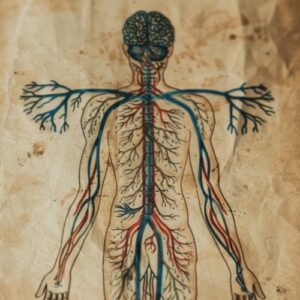
Understanding the somatic experience of performance and the path to authentic living
Have you ever noticed a particular tension that settles into your shoulders when you’re about to do something you “should” do rather than something you want to do? Or the way your breath becomes shallow when you’re performing a version of yourself that doesn’t quite fit?
Your body is telling you something important. It’s revealing the hidden cost of living according to societal expectations rather than your own truth. And this cost isn’t just psychological—it’s deeply physiological, affecting your nervous system, your health, and your capacity for genuine connection.
The Exhaustion Nobody Talks About
In modern society, we’re surrounded by invisible scripts about who we’re supposed to be and how we’re supposed to live. Graduate by 22. Career established by 25. Married by 30. House and children by 35. “Figured out” by 40. These milestones aren’t just suggestions—they’re presented as the blueprint for a successful, meaningful life.
But what happens when you follow the blueprint and still feel empty? What happens when you achieve all the “right” things and your body is still tense, your sleep is still disrupted, and you can’t shake the feeling that something fundamental is missing?
This is the exhaustion nobody talks about: the chronic depletion that comes from constant performance. From monitoring whether you’re doing it “right.” From measuring yourself against standards that were never designed for your unique shape.
And here’s what somatic therapy and nervous system research reveal: this exhaustion isn’t just in your mind. It’s in your body. Your nervous system is paying the price.
Understanding the Somatic Cost of Performance
When we talk about “living authentically” versus “performing for society,” we’re not just discussing abstract philosophical concepts. We’re describing two fundamentally different states of your autonomic nervous system.
The Nervous System Under Performance
Your autonomic nervous system has two primary branches: the sympathetic (activation/mobilization) and the parasympathetic (rest/restoration). Under healthy conditions, these systems work in balance, allowing you to respond appropriately to challenges and then return to a state of regulation.
But when you’re constantly monitoring whether you’re meeting external expectations, your nervous system enters a state of chronic low-level activation. Not full fight-or-flight, but a persistent vigilance that asks: Am I doing this right? Am I good enough? Am I acceptable?
This chronic activation manifests somatically as:
- Tension that settles into your shoulders, jaw, or chest
- Shallow breathing that never quite deepens
- A feeling of bracing or constriction in your body
- Difficulty fully relaxing, even in moments meant for rest
- A sense of monitoring yourself from the outside
Over time, this chronic activation depletes your system. Your body never fully rests because it’s constantly checking: Am I fitting the expectation? Am I measuring up?
The Somatic Experience of Authenticity
Contrast this with the somatic experience of authenticity. When you’re making choices aligned with your actual values and needs—when you’re being yourself rather than performing a role—your nervous system responds differently.
There’s a subtle softening. Not dramatic, but noticeable if you pay attention. Your breath deepens slightly. Your shoulders drop a fraction. There’s a sense of more space, less constriction. Your body settles into what polyvagal theory calls “social engagement”—a state where you feel both safe and present.
This isn’t perfect peace or the absence of challenge. It’s simply the experience of structural integrity: when your inner life and outer life are aligned, when you’re not split between who you are in private and who you present publicly.
Your nervous system knows the difference. It always has.
The Family Constellation Perspective: Invisible Loyalties
One of the most profound insights from family constellation work—a systemic approach to understanding inherited patterns—is that we don’t just learn explicit rules from our families. We absorb invisible loyalties.
These are unconscious agreements about who we’re allowed to be, based on who came before us. And they often operate completely outside our awareness, shaping our choices in ways we don’t recognize.
How Invisible Loyalties Operate
Consider these examples from systemic family constellation work:
The Success Ceiling: A woman finds herself unable to advance beyond a certain level in her career. Every time opportunity arises, she sabotages it. Looking at her family system reveals that her mother, despite being talented, never got to develop her gifts because she had to sacrifice everything for the family. The daughter’s unconscious loyalty: “If my mother couldn’t succeed, neither can I. Succeeding would mean leaving her behind.”
The Commitment Pattern: A man genuinely wants a committed relationship but repeatedly pulls away when things get serious. His father was trapped in an unhappy marriage and told him as a child: “Don’t make the mistakes I made.” The son absorbed this as: “Commitment is a trap. Don’t let yourself be caught.” He’s being loyal to his father’s suffering by refusing to risk what his father risked.
The Work Compulsion: Someone can’t stop working, even when exhausted and burning out. Their grandparents survived extreme poverty where rest meant danger, where stopping work meant not eating. Three generations later, their descendant’s body still carries that programming: “Rest is dangerous. Productivity equals survival.”
These patterns aren’t conscious choices. They’re systemic adaptations—what Bert Hellinger, the founder of family constellation work, called “entanglements.” When a descendant becomes entangled with an ancestor’s fate, they unconsciously live out unresolved patterns as a form of loyalty.
From a family constellation perspective, many societal expectations we struggle with aren’t even originally ours. They’re inherited scripts, passed down through generations, that we’re unconsciously acting out.
Breaking Invisible Loyalties
The path to freedom involves recognizing these loyalties without shame. You’re not weak for carrying ancestral patterns. You absorbed them because you loved the people who came before you. Because you wanted to belong. Because loyalty is a survival mechanism that served your ancestors and initially served you.
But loyalty that once protected can become a cage. And you’re allowed to say: “I honor what you carried. I see what you couldn’t have. And I’m choosing a different path—not to reject you, but to live my own life.”
This isn’t about blaming your family. It’s about understanding that freedom often requires conscious differentiation from inherited patterns that no longer serve your actual life.
Structure vs. Script: The Crucial Distinction
Here’s where many people misunderstand the call to “live authentically.” They think it means rejecting all structure, becoming anti-social, or living in isolation. But that’s not the path to freedom—it’s just a different form of reaction.
The actual work is more subtle and more powerful. It’s learning to distinguish between structure and script.
Structure: The Framework That Can Serve
Structure exists. Laws exist. Institutions exist. Collective agreements about how we organize society—these exist, and many serve important purposes. We need some level of shared understanding to function together.
Marriage, for example, exists as a legal structure. It offers protections: shared assets, legal rights around medical decisions and inheritance, tax benefits, immigration status in some cases. That’s structure. That’s framework. That can be useful.
Work exists as structure: we live in an economic system where most of us need income. That’s reality. That’s not oppression (though the system can be oppressive)—it’s just the framework we’re currently operating within.
Parenthood exists as structure: if you have children, they need care, guidance, shelter. That’s responsibility. That’s reality.
These structures themselves aren’t the problem.
Script: The Performance That Imprisons
But then there’s the script. The performance. The unspoken rules about what these structures are supposed to look like.
Marriage as script says:
- You must merge completely
- You must want all the same things
- You must present as “the happy couple” always
- Your partner should complete you
- Sex should be spontaneous and perfect
- You must never admit struggle
- You should “just know” what the other person needs
Parenthood as script says:
- Children become your entire identity
- You must enjoy every moment (even tantrums and sleepless nights)
- You must sacrifice everything, including yourself
- You must do it the “right” way according to current parenting philosophy
- Your house must be organized
- You must make it look effortless
Work as script says:
- Your job title defines your worth as a human
- Success means climbing—always higher, always more money
- You should always be hustling, always productive
- Retirement is the prize you work toward your entire life
- If you’re not passionate about your work, something’s wrong with you
Do you feel the difference?
The structure says: here’s a framework for how we organize certain aspects of collective life.
The script says: here’s exactly how you must perform within that framework, and if you deviate, you’re doing it wrong.
Freedom Within Reality
The path to authentic living isn’t about escaping structure. It’s about recognizing that you can participate in structures while refusing to perform the scripts.
You can engage with society while defining your own relationship to it. You can have roles without being imprisoned by them.
This is freedom within reality, not escape from reality.
This means:
- I’m married AND I define what that means for me, not what society says it should mean
- I’m a parent AND I do it my way, not according to impossible standards
- I work AND my job doesn’t define my worth
- I’m an adult AND what that looks like for me might be different than for others
- I have responsibilities AND I’m still a whole person beyond those roles
You can use the structures that serve you. You can reject the scripts that don’t.
Real Examples of Creating Your Own Normal
Let’s get specific about what this looks like in practice. These examples aren’t prescriptions—they’re possibilities. Your version will be yours.
Marriage and Partnership: Beyond the Script
Traditional script says: You must live together, share everything, never need significant time apart, present as a “united front” always.
Creating your own normal might look like:
- A couple with separate bedrooms because they both sleep better apart—their marriage includes separate sleep space, and their relationship is actually deeper because they’re both well-rested
- Partners with completely separate finances who split shared expenses but keep their money independent—no fighting about spending habits
- Couples who take separate vacations sometimes, not because anything’s wrong, but because they’re still individuals with different interests
- Relationships with explicit agreements about emotional labor, division of tasks, and how to handle conflict—very unsexy spreadsheets involved, but it works
What these share: They’re using the legal/social structure of marriage, but they’ve rejected the script about what marriage must look like.
Parenting: Your Version
Traditional script says: You must be fulfilled by every moment, sacrifice your identity completely, do it the trending way, never admit struggle.
Creating your own normal might look like:
- A parent who says openly: “I love my kids, and some days I don’t like parenting. Some days I count the hours until bedtime. That doesn’t make me a bad parent—it makes me honest.”
- Someone who prioritizes their own mental health over Pinterest-perfect experiences
- A parent who doesn’t do elaborate birthday parties or Santa rituals because they don’t want to, and their kids are fine
- A working parent who doesn’t feel guilty about working because they’re modeling that adults work and family and career can coexist
What these share: They’ve rejected the parenting culture script. They’re parenting as whole humans who are also parents, not as parents who’ve erased themselves.
Career: Redefining Success
Traditional script says: Your job title defines you, success equals more money and higher position, passion should drive your work.
Creating your own normal might look like:
- Someone who walked away from a high-status corporate job to do work they actually enjoy, making less money but having their life back
- A person who works a “just okay” job and that’s fine—work pays bills, passion lives elsewhere
- Someone who chose to stay in a mid-level position instead of accepting promotions because they like their work-life balance and more responsibility isn’t worth the stress
- A person who works part-time by choice, lives simply, has less money but more time
What these share: They’ve rejected the “work defines your worth” script. Work is part of life, but it’s not life itself.
What Becomes Possible: The Gifts of Authentic Living
https://www.youtube.com/watch?v=X3a5blcKLBY
When you stop performing and start creating your own normal, something profound shifts. Here’s what research in somatic therapy, trauma healing, and nervous system regulation reveals about authentic living:
Your Relationships Become More Real
When you’re not performing the role of Perfect Spouse or Good Parent or Successful Friend, when you’re just being yourself—messy, imperfect, human—the people who love you get to love the actual you.
Some people might leave. They preferred the performance. That’s painful, but it’s also information. Better to have relationships with people who want you, not your performance.
Authentic connection only happens when people meet each other as they actually are.
Your Energy Returns
Do you know how much energy it takes to maintain constant performance? To monitor whether you’re doing it right? To adjust yourself based on what others expect?
That energy is life force. When you reclaim it, when you stop using it all on performance, it becomes available for actually living.
Your Body Relaxes
Not all at once. Not completely. But incrementally, your nervous system begins to settle.
Because it’s no longer in chronic vigilance about whether you’re acceptable. It’s no longer monitoring the constant gap between who you are and who you’re supposed to be.
When you stop performing, your shoulders drop. Your jaw softens. Your breath deepens. Not because you’re trying to relax—because you’re just yourself. And that’s inherently less stressful than constant self-monitoring.
Something Deeper Shifts: Structural Integrity
There’s a particular kind of integrity that comes from living in alignment with yourself rather than in alignment with expectations.
Not moral superiority. Just structural integrity. Like a building that’s properly aligned—it stands easier, requires less maintenance, weathers storms better.
Your inner life and outer life begin to match. You’re not split between who you are in private and who you present publicly. That integration is deeply restful.
You Find Your People
When you stop performing, you stop attracting people who only liked the performance. And you start resonating with people who recognize authenticity when they see it.
These connections feel different. Deeper. More real. Less exhausting. Because you’re not managing impressions—you’re just meeting each other as you actually are.
Your real self calls to other real selves. And suddenly you’re not alone anymore in the way you were alone when you were performing.
Beginning the Practice: Somatic Tools for Authentic Living
If you’re ready to begin exploring your own version of authentic living, here are some somatic and practical approaches to start:
Notice When You’re Performing vs. Being Authentic
Start with simple awareness. Don’t judge, don’t try to fix immediately. Just notice.
When you catch yourself thinking, “A good [spouse/parent/professional/adult] would do this”—pause. Ask: Is this what I actually want to do? Or is this what the script says I should do?
Sometimes both. Sometimes alignment between expectation and desire exists. That’s fine.
But sometimes the answer is: “I’m doing this because I think I should, not because I want to.” That’s where the work is.
Body-Based Awareness Practice
Several times throughout your day, pause and scan your body:
- Where do you notice tension?
- Where is your breath? Shallow or deep?
- What’s the quality of your posture? Braced or relaxed?
- What emotions are present?
Notice if these sensations correlate with activities you “should” do versus activities you want to do.
Your body will show you the difference between performance and authenticity if you pay attention.
Identify One Area to Create Your Own Normal
Pick one label, one role, one expectation. Just one to start.
Ask: What would my version look like?
Maybe it’s tiny. Maybe it’s just one small way you stop performing and start being honest.
Start small. One thing. That’s how it begins.
Practice Tolerating Others’ Discomfort
When you stop performing, some people won’t like it. They preferred the performance. Your authenticity might make them uncomfortable because it highlights their own performance.
Their discomfort is information, but it’s not a reason to go back to pretending.
You can be compassionate about their discomfort while still being authentic. You can say (internally if not out loud): “I see that my choice makes you uncomfortable. That’s okay. You can be uncomfortable. I’m still doing this.”
Find At Least One Witness
Find at least one person who can witness your actual self, not your performance. This might be a therapist, a trusted friend, a partner willing to go on this journey with you.
Having even one relationship where you don’t have to perform makes the rest more bearable. It gives you a place to return to yourself.
The Path Forward: Permission to Be Yourself
Living authentically isn’t something you achieve once and it’s done. It’s something you practice. Daily. In small moments and large ones.
Every time you choose authenticity over performance, you’re practicing.
Every time you define your own normal instead of following the script, you’re practicing.
Every time you say “This is my version” even when it doesn’t match anyone else’s—you’re practicing.
You don’t owe anyone a performance. You don’t have to fit into labels that were never designed for your specific shape. You can have roles without being imprisoned by them.
The freedom to be yourself isn’t about escaping reality. It’s about being yourself within it. It’s about creating your own normal within the world that exists.
Not because you’re rejecting society.
Because you’re finally, actually, genuinely being yourself.
And your nervous system—your body, your energy, your sense of peace—will thank you for it.
This article explores themes from somatic therapy, family constellation work, nervous system regulation, and integrative healing approaches. For guided practices on living authentically and regulating your nervous system, explore meditation content and wisdom teachings that integrate body-based healing with practical guidance for everyday life.
Further Exploration
Related Topics:
- Somatic Experiencing and trauma healing
- Polyvagal theory and nervous system regulation
- Family constellation therapy and systemic healing
- Authentic living and personal freedom
- Mind-body connection and embodiment practices
- Breaking free from societal expectations
- Mindfulness and self-awareness cultivation
- Emotional healing through body-based approaches
About the Practice
This exploration is part of a broader approach to holistic healing that integrates somatic therapy, family constellation work, energy healing modalities, and nervous system regulation. The work focuses on helping individuals understand the body-mind connection, release inherited patterns, and create lives aligned with their authentic selves—not through escaping society, but through conscious engagement with it on their own terms.
For guided meditations and wisdom teachings on these themes, search for content on authentic living, somatic therapy, nervous system regulation, and family constellation work across meditation platforms.