You’ve probably heard about inner child work. Perhaps you’ve read about it, journaled about it, even talked about it in therapy. You understand, intellectually, that some of your patterns come from childhood. You can trace the origins of your people-pleasing, your perfectionism, your fear of abandonment.
And yet… the patterns persist.
You still find yourself saying yes when you mean no. You still hear that harsh inner critic the moment you make a mistake. You still feel that familiar anxiety when someone you love seems distant, even though you know, rationally, that they’re probably just tired.
If this sounds familiar, you’re not alone. And more importantly, you’re not doing anything wrong. The issue isn’t your effort or your insight. The issue is that traditional approaches to inner child work, while valuable, often miss a crucial piece of the puzzle.
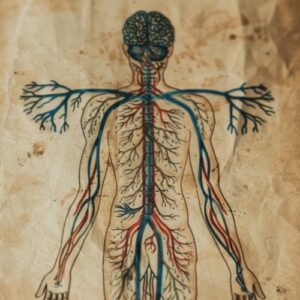
Your inner child doesn’t just live in your memories or your thoughts. They live in your body.
The Body Keeps the Score: How Childhood Experience Lives in Your Tissues
There’s a phrase that has become almost ubiquitous in trauma-informed circles: “The body keeps the score.” It’s the title of a groundbreaking book by psychiatrist Bessel van der Kolk, and it points to something that Eastern healing traditions have understood for millennia but Western psychology is only now catching up to.
Our experiences — especially the overwhelming ones — don’t just get filed away in the memory banks of our brain. They get encoded in our nervous system. They shape our posture, our breathing patterns, our muscle tension, our visceral responses. They become part of our body’s operating system.
Think about it: A child who grew up walking on eggshells around an angry parent might still, decades later, tense their shoulders and hold their breath at the sound of a raised voice — even if they’re now in a completely safe environment. A child who learned that their emotions were “too much” might have developed a habitual tightening in their throat or chest that literally constricts their emotional expression.
These aren’t just metaphors. They’re physiological realities. And they’re why talking about childhood wounds, while important, is often not enough to heal them.
The Insight Trap: Why Understanding Doesn’t Always Lead to Change
There’s a phenomenon in psychology sometimes called the “insight trap.” It’s when someone develops sophisticated intellectual understanding of their patterns — where they came from, why they developed, what purpose they served — and yet nothing actually changes.
“I know I shouldn’t feel this way.” How many times have you said that? “I know they’re not going to leave me. I know I did a good job. I know my worth isn’t determined by my productivity. I know, I know, I know…”
But the knowing doesn’t change the feeling. The understanding doesn’t dissolve the reaction. Why?
Because the feeling isn’t coming from your rational, adult brain. It’s coming from a much older, much deeper place. It’s coming from neural pathways that were laid down before you had language to describe your experience. It’s coming from your nervous system, which learned what was safe and what was threatening long before your prefrontal cortex was fully developed.
You can’t reason with the nervous system. You can’t convince it with logic. You have to speak to it in its own language — the language of sensation, of breath, of movement, of felt safety.
What is the Inner Child, Really?
The term “inner child” can sound abstract or even a bit mystical. But it’s actually pointing to something quite concrete.
Your inner child is simply the part of your psyche that formed during childhood. It holds your early experiences — both the joyful and the painful. It carries the beliefs you developed about yourself, about relationships, about the world, at a time when you didn’t have the cognitive capacity to question or contextualise them.
When you were five years old and your parent snapped at you, you didn’t think, “Mum must be stressed about work. Her reaction isn’t really about me.” You thought, “I did something wrong. I’m bad. I need to be better to be loved.”
And that belief — formed in a moment, encoded in your nervous system — didn’t stay in childhood. It came with you. It’s still running, like a background programme, influencing your reactions and relationships decades later.
The inner child isn’t a separate entity living inside you. It’s a way of understanding the parts of yourself that are still operating from childhood logic and childhood wounds. It’s a doorway to the developmental material that never got fully processed or integrated.
The Somatic Approach: Meeting Your Inner Child in the Body
Somatic therapy offers a different approach to inner child work — one that doesn’t rely primarily on talking or thinking about childhood experiences, but on directly accessing and transforming how those experiences live in the body.
The word “somatic” comes from the Greek “soma,” meaning body. Somatic approaches recognise that our psychology is embodied — that our thoughts, emotions, beliefs, and patterns all have physical correlates that can be accessed and worked with directly.
In somatic inner child work, we don’t start with the story. We start with sensation. We might begin by noticing where in the body a particular emotion or reaction is felt. We get curious about its qualities — is it tight or diffuse? Hot or cold? Moving or still?
Then, something interesting often happens. When we bring gentle, curious attention to a bodily sensation, it often reveals its age. Clients frequently say things like, “This tightness in my chest… it feels young,” or “When I really drop into this fear, I feel like I’m about seven years old.”
This isn’t imagination or make-believe. It’s connecting with the part of the self that first encoded this response. And once that connection is made, healing can happen at the level where the wound actually lives.
Signs Your Inner Child is Running the Show
How do you know if unhealed inner child material is influencing your adult life? Here are some common signs:
People-pleasing and difficulty saying no often stem from a child who learned that their value depended on keeping others happy, or who experienced conditional love that required them to perform, achieve, or suppress their own needs.
Perfectionism and harsh self-criticism frequently trace back to environments where mistakes were punished or where love seemed contingent on being “good” or “successful.” The inner critic often speaks in the voice of an internalised parent or authority figure.
Disproportionate emotional reactions — when something relatively small triggers a huge response — often indicate that a current situation has touched an old wound. It’s not just about what happened today; it’s resonating with accumulated experiences from the past.
Fear of abandonment can manifest as clinginess, jealousy, or constant need for reassurance. It often develops in children who experienced inconsistent caregiving, loss, or the threat of being left.
Difficulty receiving love or accepting compliments sometimes indicates a child who didn’t feel truly seen or valued. There’s a core belief that says, “If they really knew me, they wouldn’t love me.”
Reparenting: Becoming Your Own Good Parent
One of the most powerful aspects of inner child work is the concept of reparenting — learning to provide for yourself what you needed but didn’t fully receive in childhood.
This isn’t about blame. Most parents do the best they can with the resources, awareness, and support they have. And even the most loving, well-intentioned parents can’t meet every need perfectly. Every childhood has its gaps.
Reparenting is about completion, not criticism. It’s recognising that your adult self now has capacities your parents might not have had — and that you can offer yourself the nurturing, protection, validation, and unconditional positive regard that every child deserves.
When we do this somatically — when we actually place a hand on our heart while feeling vulnerable, when we speak kindly to ourselves out loud, when we hold ourselves with the tenderness we’d offer a frightened child — we’re not just thinking about reparenting. We’re embodying it. We’re giving the inner child a felt sense of being cared for.
And that’s what changes the nervous system.
Guided Practice: Meeting Your Inner Child Through the Body
I’ve created a somatic meditation specifically designed to help you connect with your inner child — not through analysis or memory, but through the doorway of bodily sensation.
In this practice, you’ll be guided to locate where your inner child lives in your body, meet them with compassion, and offer them what they needed. This isn’t about reliving painful memories — it’s about providing a new experience of being seen, held, and valued.
The Ongoing Relationship: Inner Child Work as Practice
Inner child healing isn’t a one-time event. It’s an ongoing relationship — a practice of noticing when younger parts of yourself are activated, responding with compassion rather than criticism, and gradually building trust with the most vulnerable aspects of who you are.
In time, this practice transforms not just how you relate to yourself, but how you relate to others. The people-pleasing softens because you’re meeting your own needs for approval. The perfectionism eases because you’re offering yourself unconditional acceptance. The fear of abandonment loses its grip because you’ve become someone who will never leave yourself.
Your inner child has been waiting a long time to be seen. They’ve been carrying burdens that were never theirs to carry. They’ve been trying to protect you in the only ways they knew how.
Now you’re here, with adult resources and adult understanding. You can take the weight. You can offer the love. You can say the words they’ve been longing to hear.
The healing is already beginning.